
Doldrums

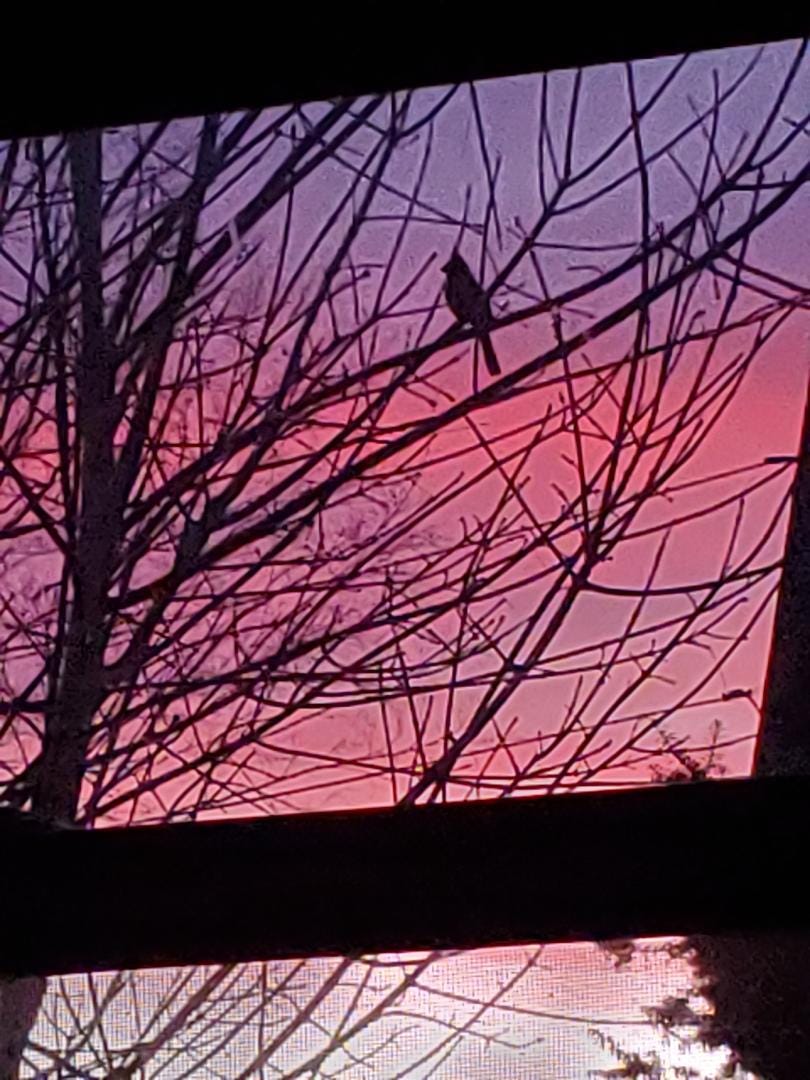
At least once a year, and most likely more often, I say that “if I didn’t have such great friends I would have left New England a long time ago.” Having grown up in southern Pennsylvania, I remember seeing crocus’ blooming on Valentine’s Day. Once the hubbub of the holidays has passed I am more than ready for spring. Between January and late March is what I usually refer to as the “doldrums.” Cold, often grey, raw weather, and far fewer social connections in general. Even just hanging out with my horses is far less appealing as the farm chores get harder and longer and it’s just too cold, and I am too tired most days to enjoy them. Like the cardinal in the photo, life seems muted.
I have been thinking about self-care more recently and how self-care can help with the doldrums. I came across a quote recently that just knocked me out with the sheer clarity it presented. “Self-care is the constant practice of not letting more pain accumulate. It is about continually remembering that our lives are of value. It is the active process of settling our nervous systems so that we have more access to the present moment.” - Susan Raffo. This quote brought me back to a basic tenant I endeavor to teach my clients. The first thing to ask yourself in the morning and possibly through your day is “How much do I want to suffer today?” While it’s probable you might think that is a silly question. I mean, who the heck wants to suffer? We do. Trauma survivors often believe it is all we deserve since we were “never good enough for parents, teachers, friends, partners, etc.”
A majority of trauma survivors have had their intense lack of self-worth beaten into them either mentally/emotionally, physically, or both. Every single moment we are creating a new body and mind. Every. Single. Moment. Trauma survivors create complex survival systems and the smarter you are the more likely you will have a rock-solid system of people pleasing, dissociating, addictions, running and hiding, and closing yourself off. Generally, there is a lot of blaming of others that seals the deal for us. Every moment we can allow ourselves to become aware and conscious of what we are choosing we re-train and re-wire our body and minds. That awareness needs to build and the organic outcome is better coping mechanisms.
The changes come slowly most of the time. I can never emphasize enough how the smallest things can create a lasting effect. That self-care is the “constant practice of not letting more pain accumulate” is central to healing trauma. One of the first steps is learning to recognize the feeling of resistance. For me, I get a heaviness on the front of my body that if pushed, turns to heat and pinpricks. Yes, there are many things we all just have to deal with just to get through life, but how you treat yourself doesn’t need to be one of them. Even something as small as buying a shirt and forcing yourself to wear it (“Hey I spent good money on this!”), even if it doesn’t fit properly or you decided you don’t like it after all sends the message of your worth to the central data bank as I like to think of it. Small choices such as spending one more minute to warm up in the shower, or letting go, even for a half-hour the need to “be productive” and rest, allows us to reset and feel our value.
How we interact with others is a big part of the process I have described. I will leave you with another excellent quote by J. Mike Fields. “When you override your Self to avoid conflict, you are reenacting the same betrayal that others once committed against you; dismissing your needs, ignoring your boundaries, treating an innocent like trash.” You are worth so much more…
Thanks for sharing these insights. Great line: I can never emphasize enough how the smallest things can create a lasting effect